

The Sleeping Gypsy
A Strange and Mesmerizing Vision
In 1897, French painter Henri Rousseau unveiled one of his most haunting and enigmatic works: The Sleeping Gypsy. At first glance, the scene appears deceptively simple—a woman lies asleep in a desert under a luminous full moon while a lion approaches her. Yet beneath its naive composition lies a profound interplay of danger and serenity, fear and imagination.
In This Story
Unlike many artists of his era, Rousseau never formally studied at prestigious academies. Instead, he was a self-taught creator, working as a toll collector by day and painting by night. His unorthodox path gave him the freedom to break away from conventional techniques and invent an entirely unique visual language—later celebrated as Naïve Art.
This article explores the story, symbolism, and enduring significance of The Sleeping Gypsy, while connecting it to broader themes in art history and human psychology.
The Scene: A Desert of Stillness
The painting presents a barren, moonlit desert. At the center lies a dark-skinned woman—identified by Rousseau as a wandering gypsy. She is draped in a striped robe, with a colorful headscarf, her bare feet exposed to the night air. By her side rests a mandolin and a clay water jar, suggesting a life of music, travel, and survival.

The most striking element, however, is the lion. With its golden mane and powerful body, the lion approaches silently, lowering its head to sniff the sleeping woman. Yet it does not attack. Instead, it seems captivated by her presence, as though tamed by the dreamlike atmosphere. Above them, a radiant full moon illuminates the scene, casting a calm glow over the silent desert.
👉 For comparison, you can explore Dalí’s Persistence of Memory, another surreal vision of dream and reality colliding.
Symbols and Layers of Meaning
1. The Sleeping Gypsy: Innocence and Vulnerability
The woman embodies both fragility and resilience. As a gypsy, she represents a life lived on the margins of society—rootless, independent, and deeply tied to nature. Her deep slumber suggests an escape into dreams, leaving her defenseless against external threats. Yet her stillness radiates a mysterious strength, as though she trusts the universe to guard her.

2. The Lion: Fear and Instinct
Traditionally, the lion symbolizes danger, predation, and untamed nature. In The Sleeping Gypsy, however, the lion refrains from violence. This reversal of expectations highlights the paradox of threat coexisting with peace. Some scholars interpret the lion as a guardian spirit, others as the embodiment of temptation or mortality.
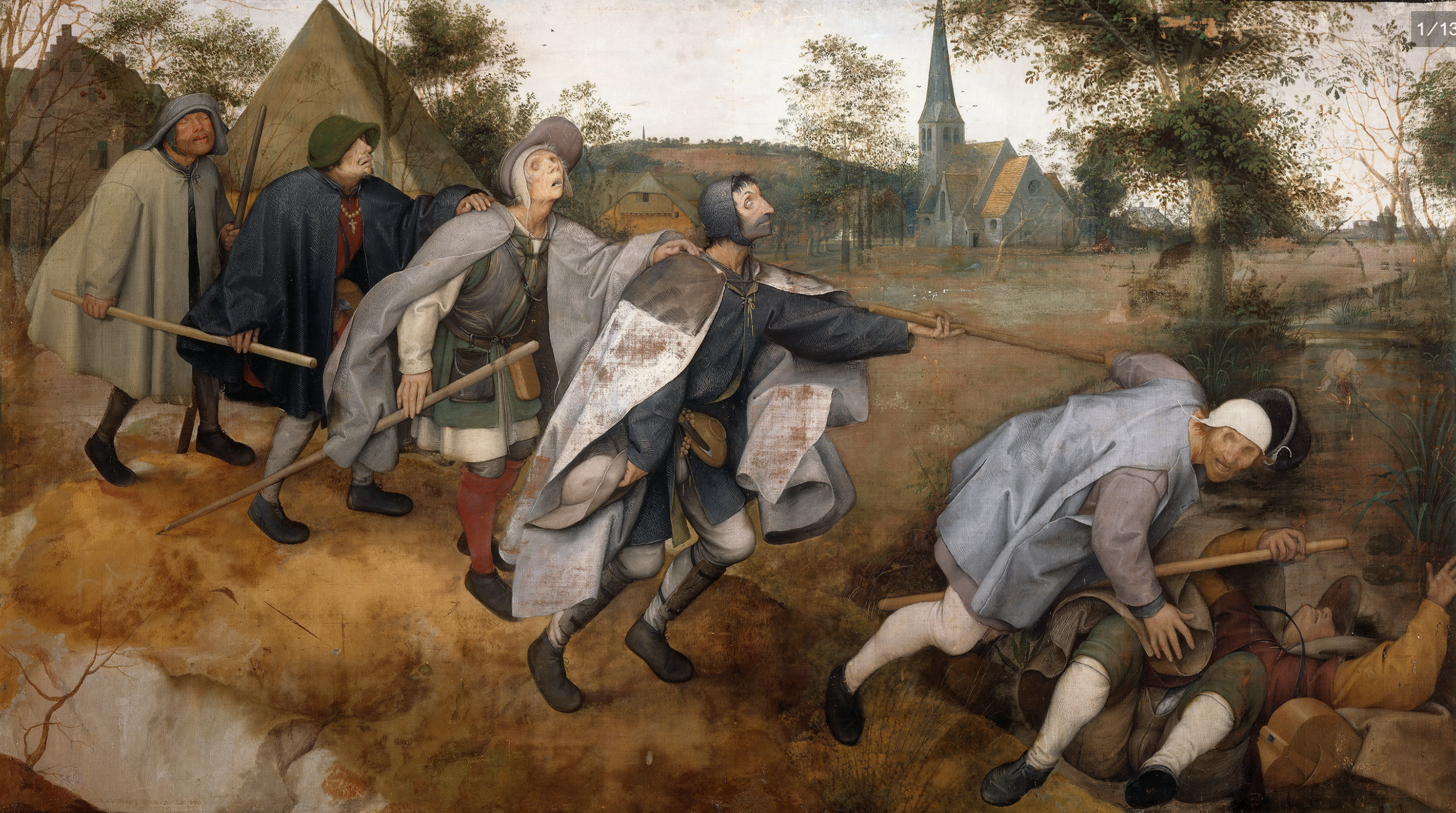
This tension between life and death also resonates with Pieter Bruegel’s The Triumph of Death, where humanity faces inevitable destruction—yet Rousseau flips the narrative toward harmony rather than annihilation.
3. The Desert: Emptiness and Timelessness
The barren setting evokes timelessness, a place where ordinary rules of reality dissolve. The desert becomes a stage for myth, where the boundaries between dream and waking life blur.
4. The Moon: Dream and Intuition
The glowing moon suggests mystery, unconscious thought, and the realm of imagination. Just as the moon guides sailors in the night, here it illuminates the delicate balance between danger and serenity.
Rousseau’s Imagination: A World Without Travel
What makes The Sleeping Gypsy even more remarkable is that Rousseau never visited deserts, jungles, or faraway lands. He spent his entire life in France, drawing inspiration from Parisian zoos, botanical gardens, and illustrated magazines.

Unlike explorers who painted from first-hand experiences, Rousseau painted from pure imagination. His jungles, wild animals, and exotic figures were products of second-hand knowledge transformed into poetic visions.
This method set him apart from contemporaries who pursued realism. Rousseau’s art was unapologetically dreamlike, echoing the fantastic worlds of Hieronymus Bosch in works like The Garden of Earthly Delights.
Contemporary Reception: Laughter and Rejection
When The Sleeping Gypsy was first exhibited, critics mocked Rousseau. They dismissed his work as childish, amateurish, and technically crude. In the 19th-century Paris art world, dominated by Impressionism and academic painting, Rousseau’s style felt alien and unsophisticated.
Yet not everyone laughed. Avant-garde artists, including Pablo Picasso, recognized something powerful in Rousseau’s visions. Picasso even hosted a legendary banquet in Rousseau’s honor, calling him a “genius.” Over time, The Sleeping Gypsy was reevaluated as a masterpiece of imaginative art, celebrated for its sincerity and originality.
A similar story occurred with Johann Heinrich Füssli’s The Nightmare, which was once criticized as grotesque but later hailed as a psychological masterpiece.
Themes of Danger and Peace
At its core, The Sleeping Gypsy raises timeless questions:
- How can vulnerability and security coexist?
- Can human imagination tame the wildest of instincts?
- Is peace possible even when danger lurks close by?
The silent standoff between the gypsy and the lion symbolizes these questions. It is a reminder that life constantly balances on the edge of peril, yet imagination and serenity can transform even the most threatening moment into beauty.
Connections to Dreams and Psychology
The painting also resonates with the psychology of dreams. The woman may represent the dreamer, while the lion embodies hidden fears. Yet rather than attacking, the lion merely observes—mirroring how our subconscious presents fears symbolically rather than literally.
This dreamlike quality aligns Rousseau with early surrealists. André Breton, founder of Surrealism, later praised Rousseau as a precursor to the movement, seeing in his works the raw material of the unconscious mind.
Legacy: From Ridicule to Reverence
Today, The Sleeping Gypsy is housed in the Museum of Modern Art (MoMA) in New York, where it continues to fascinate millions. Its legacy lies not only in its imagery but also in Rousseau’s journey from rejection to recognition.
The painting embodies the essence of modern art: the courage to defy convention, to trust imagination, and to reveal truth through simplicity rather than technical complexity.
A Question for Us All
Henri Rousseau’s The Sleeping Gypsy invites us into a world where danger and peace coexist in fragile harmony. The gypsy sleeps unafraid, the lion watches but does not harm, and the moon illuminates both.
The painting leaves us with a haunting question:
If you were in her place, could you sleep peacefully beside the lion?
FAQ
Q1. What is the meaning of Rousseau’s The Sleeping Gypsy?
It symbolizes the coexistence of danger and peace, where the gypsy represents innocence and the lion embodies fear restrained by imagination.
Q2. Why is the lion not attacking in The Sleeping Gypsy?
The lion represents instinct and danger, yet it is tamed by the dreamlike serenity of the scene, symbolizing fear transformed into peace.
Q3. Where is The Sleeping Gypsy displayed today?
It is housed at the Museum of Modern Art (MoMA) in New York City.
Q4. How did critics react to The Sleeping Gypsy in 1897?
Initially, critics mocked Rousseau’s style as childish, but over time the work was recognized as a masterpiece of Naïve Art.
Q5. Why is The Sleeping Gypsy important in art history?
It shows how imagination, not strict realism, can define artistic truth—making Rousseau a precursor to surrealism.




Leave a Reply