
A Shocking Secret Revealed
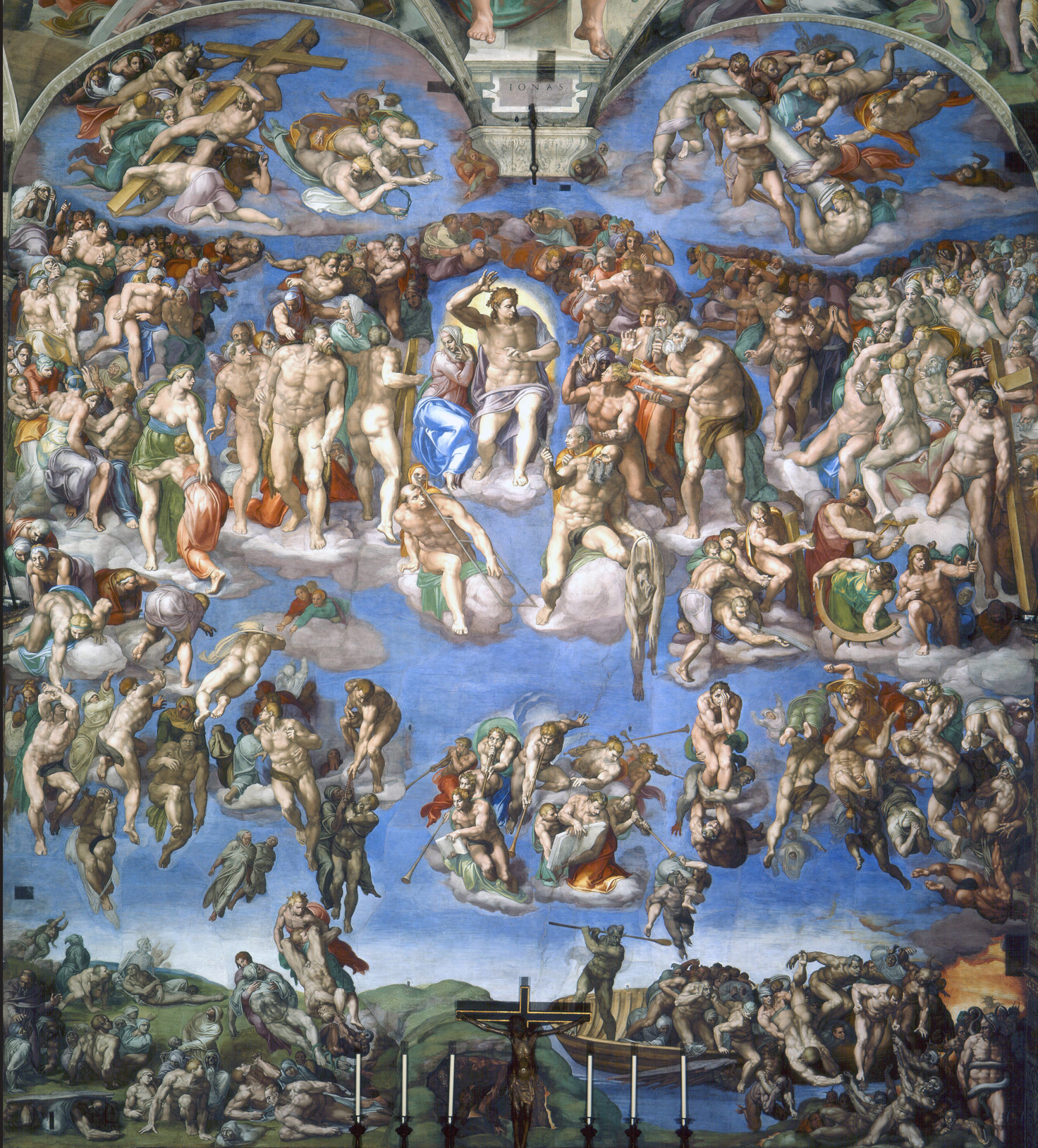
On the altar wall of the Sistine Chapel in the Vatican stands one of the most overwhelming masterpieces of the Renaissance: Michelangelo’s Last Judgment. The fresco spans over 13 meters and covers the entire altar wall, a swirling vision of angels, saints, demons, and resurrected souls.
Inside the Masterpiece
But among this grand spectacle lies a disturbing secret. In the hand of Saint Bartholomew, who was martyred by being flayed alive, hangs his own skin. Look closely, and you’ll find the distorted features of Michelangelo himself painted inside the flayed skin. This haunting confession recalls the unsettling symbolism of Böcklin’s Plague, where death is hidden in plain sight beneath layers of imagery. According to the Vatican Museums, this detail remains one of the most talked-about features for visitors standing before the fresco today.
Historical Background: Faith, Power, and Politics

The fresco was commissioned by Pope Clement VII in 1536 and completed under Pope Paul III in 1541. This was no ordinary time in Church history—the Protestant Reformation was in full swing, and Rome itself had been sacked in 1527. The papacy needed to project strength and divine authority.
By hiring Michelangelo to paint the altar wall, the Vatican sought to transform the chapel into a visual sermon: a reminder that judgment was real and that the Church stood as guardian of salvation. As Britannica explains, The Last Judgment was both theology and propaganda. This blending of art and power echoes the strategies of Hans Holbein, whose Ambassadors embedded hidden symbols to communicate mortality and politics beneath a refined surface.
Michelangelo at Work: Reluctance and Struggle
When he began the project, Michelangelo was nearly 60 years old. He already had completed the Sistine ceiling decades earlier and longed to return to sculpture. He considered painting a burden, yet papal command left him no choice.
For five years he labored on scaffolding, painting hundreds of muscular figures. His letters describe exhaustion, solitude, and resentment toward papal demands. As The Met Museum notes, Michelangelo poured his inner turmoil into the work: the bodies are restless, twisted, more violent than the serene figures on the ceiling. The sense of anxiety in the fresco recalls the nightmarish intensity of Fuseli’s The Nightmare, another work that transformed personal fears into unforgettable imagery.
Heaven and Hell: Decoding the Composition
The fresco spans over 13 meters in height, filling the viewer’s vision with a chaotic The fresco’s composition is dizzying, but it can be read in layers:

- Upper Section: Angels carry the instruments of Christ’s Passion—the cross, the crown of thorns—reminders of sacrifice and judgment.
- Central Section: At the very heart, a powerful Christ raises his hand in a commanding gesture of judgment. The Virgin Mary sits beside him, her head bowed, resigned to the fate of humanity. Around them, saints and martyrs gather in a celestial courtroom.
- Lower Left: The blessed rise from their graves, aided by angels who pull them toward the heavens. Souls ascend in hope and triumph.
- Lower Right: The damned scream in terror as demons seize them and drag them downward. Charon ferries souls across the River Styx, while Minos—judge of the underworld—stands grotesquely at the gates of hell, his body wrapped with a serpent.
This dual vision of human destiny mirrors the atmosphere of Böcklin’s Isle of the Dead, a painting so steeped in mortality that it fascinated Hitler centuries later. For modern readers, Khan Academy’s Smarthistory offers one of the clearest breakdowns of this complex composition.
Scandal and Censorship
When unveiled in 1541, The Last Judgment provoked outrage. Nearly all of the figures were nude, their twisting bodies displayed inside the Church’s most sacred space. Cardinals condemned it as indecent. One declared it belonged on the walls of a tavern rather than a chapel.

The uproar was so fierce that after Michelangelo’s death, Pope Pius IV ordered the painter Daniele da Volterra to cover the genitals and buttocks of the figures. For this, he earned the mocking nickname “Il Braghettone” (the breeches-maker).
This battle between art and morality recalls the raw horror of Goya’s Saturn Devouring His Son, another work denounced for exposing humanity’s darkest impulses with brutal honesty.
The Hidden Face of Michelangelo
Amid the swirling chaos, one detail is both grotesque and heartbreaking. In the lower center-right, Saint Bartholomew, who was martyred by being flayed alive, holds his own skin. Inside that limp shell of flesh is the distorted face of Michelangelo himself.

Why would he choose such a horrifying self-portrait?
Scholars suggest several interpretations:
- A confession of despair – Michelangelo may have doubted his own salvation, fearing that he too would be judged unworthy.
- A protest against the papacy – By embedding himself in the flayed skin, he expressed anger at the Church that forced him into servitude.
- A metaphor for artistic suffering – Like a skin peeled from the body, art required the painful stripping away of his very being.
Whatever the motive, the image is a chilling admission: the artist saw himself not among the saved, but as a hollow, tormented soul.
Reception Through the Centuries
Despite scandal and censorship, the fresco endured. Later popes considered destroying or whitewashing it, but its sheer power made such an act unthinkable. Restorations in modern times revealed Michelangelo’s original brilliance, uncovering many details hidden for centuries.
Today, scholars agree the fresco is not simply a theological statement but also an intensely personal vision. Like Böcklin’s Plague, which expressed fears of mortality, The Last Judgment channels the inner struggles of its creator as much as the doctrines of the Church.
Cultural Legacy
The fresco’s influence is immense. Its muscular bodies inspired countless artists, from mannerist painters to Baroque masters. In modern times, it appears in films, novels, and even political satire, symbolizing both awe and terror.
The hidden self-portrait, in particular, has become a touchstone in discussions about the psychology of artists. It embodies the idea that behind every masterpiece lies an inner struggle, and that art often hides the most painful truths in plain sight.
Conclusion: A Judgment Beyond Religion
Michelangelo’s Last Judgment is not merely a religious image of heaven and hell. It is a mirror of humanity—its fears, arrogance, hope, and despair.
- The nudity scandal revealed the eternal conflict between artistic freedom and moral authority.
- The hidden face inside flayed skin revealed the vulnerability of a genius who questioned his own redemption.
Ultimately, the fresco is less about divine judgment than about human fragility. In painting the end of time, Michelangelo also painted the torment of his own soul.
FAQ: Michelangelo’s Last Judgment
Q1. Where is Michelangelo’s Last Judgment located?
The fresco covers the entire altar wall of the Sistine Chapel in Vatican City. Visitors today can still view it in its restored form inside the Vatican Museums.
Q2. Why was The Last Judgment controversial?
When unveiled in 1541, the fresco shocked clergy because nearly all figures were nude. Critics called it obscene, and later censorship added draperies over exposed bodies.
Q3. How does The Last Judgment differ from Michelangelo’s Sistine ceiling?
While the ceiling celebrates creation and divine order, The Last Judgment is darker and more chaotic, emphasizing fear, judgment, and human destiny.
Q4. Was the fresco ever altered after Michelangelo finished it?
Yes. After his death, Pope Pius IV ordered another painter to cover genitals with drapery. These additions earned the artist the nickname “Il Braghettone,” or “the breeches-maker.”
Q5. What is the significance of Saint Bartholomew in the fresco?
As a martyr skinned alive, he is shown holding his flayed skin. Michelangelo inserted his own face into the sagging flesh, symbolizing despair, artistic suffering, and protest against papal authority.




Leave a Reply