
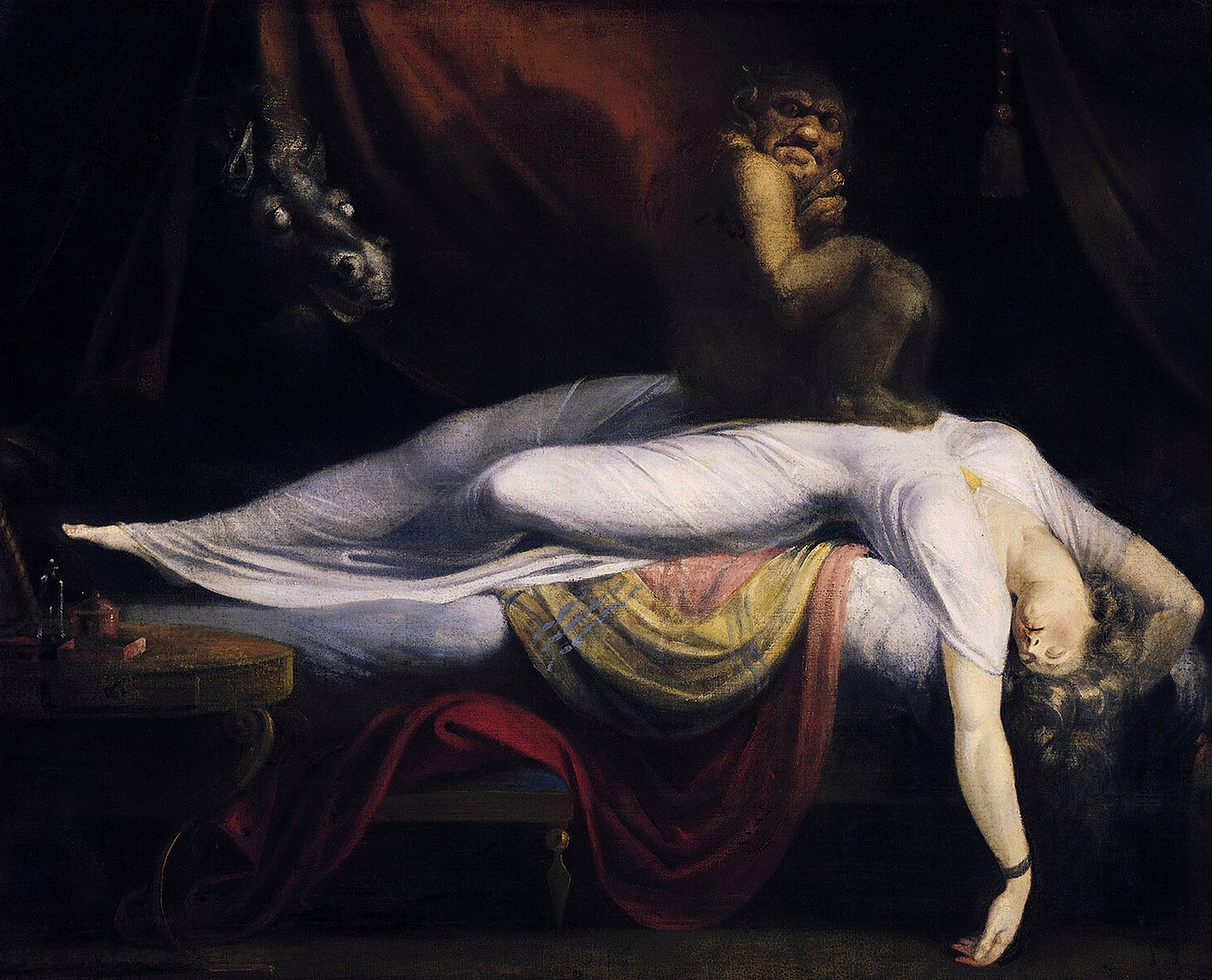
Discover the haunting story behind The Nightmare (1781) by Henry Fuseli. Explore its history, Fuseli’s lost love, the symbolism of the incubus and horse, and why this Gothic painting still fascinates and terrifies today.
Table of Contents
Introduction: When Dreams Become Shadows
Few works of art capture the uneasy line between fascination and fear like Henry Fuseli’s The Nightmare. Painted in 1781, this masterpiece shocked London audiences with its blend of terror, eroticism, and folklore. Yet behind the grotesque imagery lies a deeply personal story of heartbreak, repression, and obsession.
A Love That Turned Into a Nightmare

Behind the painting’s haunting imagery lies a personal wound. Fuseli once fell in love with Anna Landholdt, a Swiss woman. He proposed, but she rejected him. The rejection devastated him, and some art historians believe that the limp, vulnerable woman in The Nightmare echoes Anna herself—an unattainable figure, trapped between beauty and torment.
The incubus crouching on her chest could symbolize Fuseli’s own unfulfilled desires: love transformed into a monstrous presence, suffocating and inescapable. What viewers saw as Gothic fantasy may also have been the painter’s confession of heartbreak.
Learn more about this interpretation here.
The Painting’s Debut and Public Shock
When The Nightmare was exhibited at the Royal Academy in 1782, the reaction was explosive. Critics were horrified by the limp, sensuous pose of the woman, the grotesque incubus, and the lurid atmosphere. Audiences whispered about its indecency, yet they could not look away.
The scandal fueled its fame. Engravings by John Raphael Smith soon circulated across Europe, spreading the imagery far beyond London. The original painting now resides at the Detroit Institute of Arts.
Symbolism and Hidden Details
Fuseli layered the painting with meaning:
- The Incubus: In European folklore, an incubus was a demon said to visit women in their sleep, causing both fear and forbidden pleasure. Its stare outward implicates the viewer—you too are part of this nightmare.

- The Horse (“Night-Mare”): Early sketches show no horse. Fuseli added it later, a chilling pun on the word “nightmare.” The bulging eyes and flaring nostrils make the beast more specter than animal.

- The Woman’s Pose: Her twisted, limp position resembles modern accounts of sleep paralysis—the crushing sensation of being unable to move or breathe as terror presses down.
Influence on Literature and Psychology
The cultural impact of The Nightmare was immense. Gothic writers found in it the perfect visual metaphor for dread and desire. Mary Shelley, author of Frankenstein, was influenced by Fuseli’s imagery and Gothic sensibility.
A century later, Sigmund Freud displayed an engraving of the painting in his Vienna office. For Freud, the work embodied the subconscious, repression, and the mingling of fear with desire.
Why It Still Haunts Us Today
More than two centuries later, The Nightmare retains its power. It terrifies because it feels familiar: the weight on the chest, the helpless paralysis, the blurred line between dream and waking life.
Art critics note that its mix of eroticism and horror continues to provoke unease. It confronts us with the truth that nightmares are not only the stuff of sleep—they are reflections of our deepest fears, lurking even when we are awake.
As Artsper’s analysis suggests, the painting endures because it visualizes universal human vulnerability, exposing the shadows we prefer to keep hidden.
Who Was Henry Fuseli?

Henry Fuseli (1741–1825), born Johann Heinrich Füssli in Zurich, was a Swiss painter who spent most of his career in London. Unlike his contemporaries, who favored moral lessons or polite landscapes, Fuseli pursued the darker corners of the imagination—mythology, dreams, nightmares, and desire. His fascination with the subconscious set him apart as a forerunner of Romanticism and even modern psychology.
Conclusion: The Eternal Nightmare
The Nightmare is more than a Gothic fantasy. It is Fuseli’s raw meditation on desire, heartbreak, and the demons of the mind. In 1782, it scandalized polite society. Today, it still whispers the same unsettling question:
Are nightmares only in our dreams, or do they linger in the shadows of our waking lives?
The Nightmare (Henry Fuseli, 1781) FAQ
1. What is The Nightmare painting about?
The Nightmare (1781) by Henry Fuseli depicts a woman in deep sleep with a demonic incubus sitting on her chest and a ghostly horse emerging from the shadows. It explores themes of eroticism, fear, and the supernatural, reflecting both Gothic fascination and personal symbolism.
2. Who painted The Nightmare?
The painting was created by Henry Fuseli (1741–1825), a Swiss Romantic painter who later became a professor at the Royal Academy in London. Fuseli was known for his dramatic, dark, and imaginative works inspired by Shakespeare, Milton, and Gothic literature.
3. Where is The Nightmare located today?
The original 1781 version of The Nightmare is housed in the Detroit Institute of Arts, Michigan, USA. Fuseli also painted several variations of the theme, which are found in private collections and museums across Europe.
4. What does the incubus symbolize in the painting?
The incubus in The Nightmare symbolizes sleep paralysis, repressed desire, and the darker side of human psychology. In folklore, an incubus was believed to sit on women while they slept, causing terrifying dreams and sensations of suffocation.
5. Why did Fuseli paint The Nightmare?
Art historians suggest Fuseli painted The Nightmare after his failed love affair with Anna Landolt, the niece of his close friend. The painting has been interpreted as an expression of heartbreak, obsession, and repressed sexuality transformed into Gothic art.
6. Why is The Nightmare considered important?
The painting is one of the most iconic works of Gothic art and is often linked to early studies of psychology, especially concepts of the subconscious and sleep paralysis. It influenced literature, horror art, and even Sigmund Freud’s later ideas of dream analysis.
7. Is The Nightmare a Gothic painting?
Yes, The Nightmare is considered a masterpiece of Gothic Romanticism, blending supernatural imagery, dark symbolism, and intense emotion. It exemplifies the fascination with terror and the unknown that defined late 18th-century Gothic culture.
More Reading:
The Ambassadors (1533): Holbein’s Secret Skull and the Fragility of Power




Leave a Reply to 7 Ways Böcklin’s Plague Warns of PandemicsCancel reply